
Fact Guard
Protect important factual context and surface unsupported or conflicting changes that need human attention.
PressAI combines Fact Guard, the Editorial Quality Gate and Publishing Readiness so unsupported factual changes, missing editorial requirements and incomplete publishing conditions can be surfaced before execution.
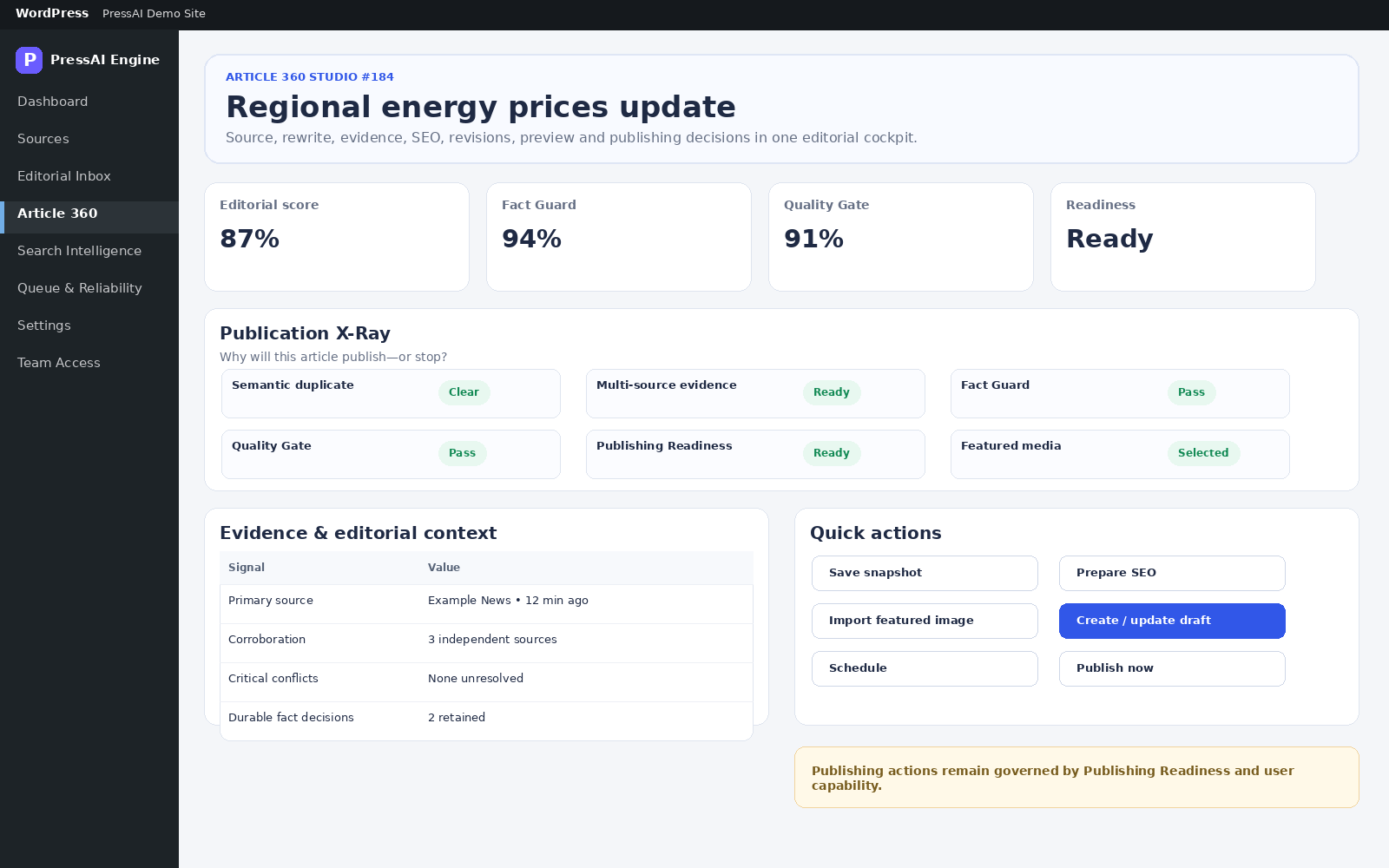
PressAI keeps them separate so a piece of content can be factually consistent but still fail editorial requirements, or be editorially ready while still missing publishing prerequisites such as media, SEO information or authority to publish.
Protect important factual context and surface unsupported or conflicting changes that need human attention.
Evaluate configured editorial requirements before the item advances further through the workflow.
Collect the decisions and prerequisites needed before a draft, schedule or publish action is executed.
Review the article against its evidence, source context and durable fact decisions.
Surface unsupported changes, conflicts, missing information or failed editorial conditions.
Let an authorized editor keep, correct or explicitly decide how the issue should be handled.
Allow publishing actions only after the required readiness state and permission checks are satisfied.
When evidence conflicts, especially around dates, amounts, percentages, scores or other material values, the safer behavior is to show the conflict to the editor. PressAI is designed to preserve that review point rather than hide uncertainty behind fluent text.
Use the operational guides to understand the checks and actions available in the workflow.
A rewrite can sound fluent while changing a number, date, name or relationship that the source evidence did not support.
A polished article can still be missing required review, media, SEO or permission conditions.
Without durable decisions, the same resolved issue may reappear in later revisions or stronger-source updates.
Use factual, editorial and publishing checks before the final action.